

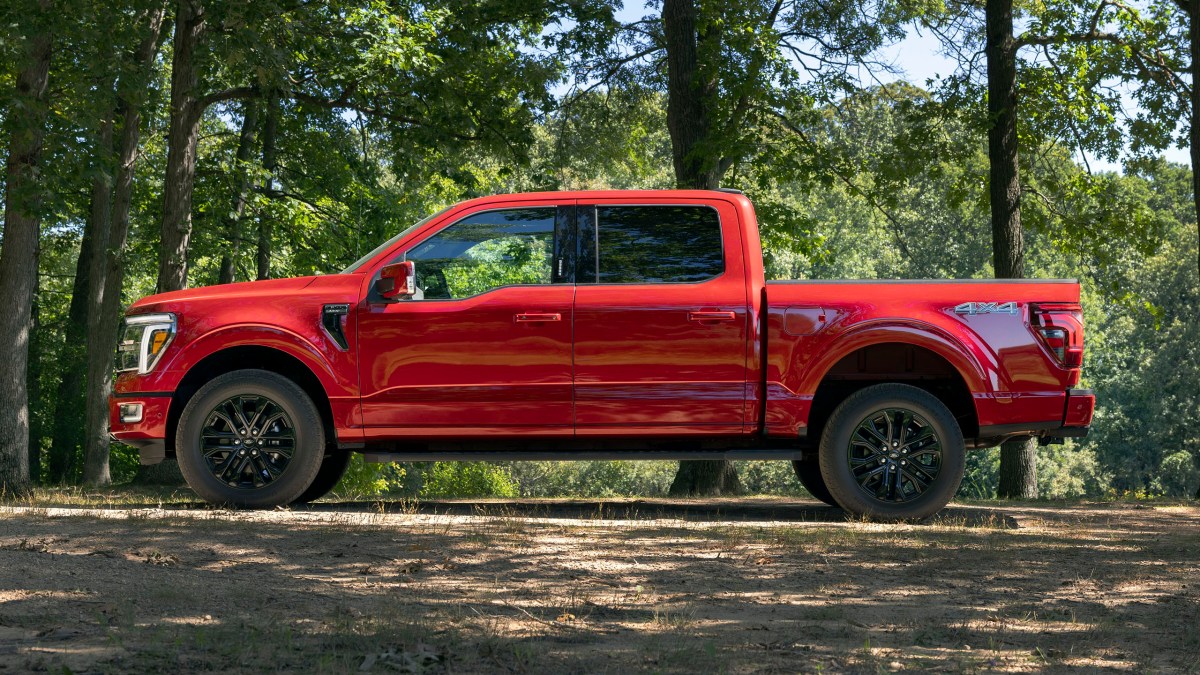
Last week, Ford made headlines about how its updated Mustang is selling. However, buried a bit deeper in Ford’s sales update was some not-so-rosy news. Sales of the F-Series pickup are still depressed compared to a year ago. And while that may be partially reflective of the fact that fewer people are buying full-size domestic pickups right now than they were just a few years ago, Ford says it has nevertheless been struggling to fill demand for its high-volume (and highly profitable) pickups since last fall, when a fire halted output at one of the nation’s biggest domestic aluminum parts suppliers, Novelis.
Novelis, which supplies aluminum to many automakers beyond just Ford, says production at its Oswego, New York, facility should resume in June. In the meantime, Novelis has been forced to fulfill its contract with aluminum sourced from overseas. Yep, that means tariffs, and to the tune of 25%. This is particularly painful for Ford, which for a while had a vegan-like penchant for reminding people just what it puts into its bodies—in this case, the aluminum panels it uses for its full-size pickups.
Citing these extenuating circumstances, Ford approached the administration late last year to request temporary tariff relief. It was granted, but unfortunately, it was a bit too temporary. The administration approved a waiver covering Ford’s operations through November—roughly a month after the accident—rather than through May of this year, at which point Novelis expects New York production to be back online. That adjustment alone cost Ford about $900 million in additional tariff obligations.
Like other automakers, Ford has been finding ways to offset tariff-induced inflation without raising sticker prices, but many customers are finding out the hard way that the impact is reaching showrooms, where non-negotiable destination and delivery fees have been inching upward.
In the meantime, The Wall Street Journal now reports, Ford has continued to lobby for tariff relief to little effect. The administration remains recalcitrant, however, a White House official told the Journal that automakers (Ford included) “have not requested tariff relief on this matter in a particularly pronounced way.”
Meaning… what exactly? We’ll leave that up to you to decide.
In the meantime, the real loser here will continue to be the customer. Money that Ford spends paying unanticipated tariffs is money that could have been put on the hood to help move new pickups. That’s OK; the government will surely find a way to spend it wisely.
Got a news tip? Let us know at [email protected]!
Read the full article here