

Colin Chapman made a name for himself with the philosophy of “simplifying and adding lightness.” When in doubt, in other words, do less—decrease complexity, remove anything you don’t absolutely need, and maybe convince your driver that water intake is for quitters. It was a winning strategy (and a legacy-defining approach to building race cars), but, at least judging by the general state of the auto industry, one with only limited applicability in the modern consumer market. After all, Chapman cared about winning races, not winning the hearts and minds of American EV buyers; perhaps a new approach is called for.
Enter Ford. As we learned late last year, the Blue Oval is pining for the affordable car market—the same one it effectively abandoned when it discontinued its sedans and hatchbacks. With average transaction prices parked around the $50,000 mark (and electric cars dragging that number in the wrong direction), Ford is feeling the frugality crunch. You see, the issue wasn’t that nobody wanted to buy Ford’s cheap cars; it was that Ford couldn’t build them cheaply enough to make money selling them at the price points buyers expected. To prevent a repeat, Ford decided it was time to embrace a new approach to simplifying production, embodied by a simple catchphrase:
“The best part is no part.”
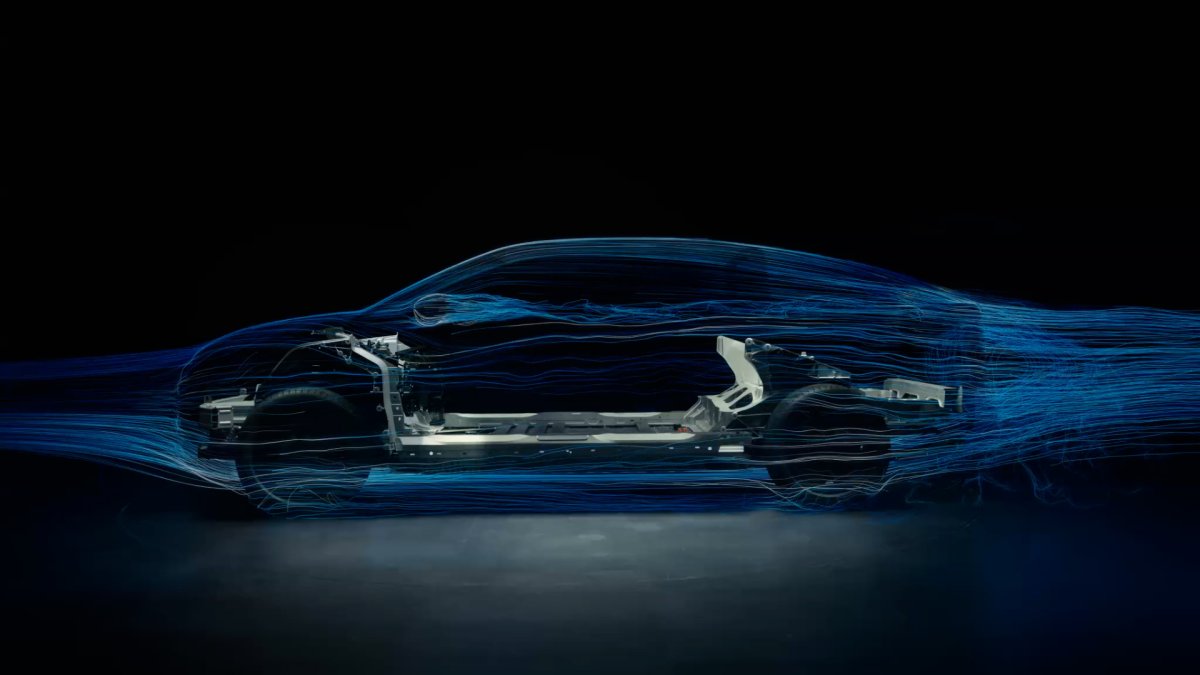
Broadly speaking, Ford’s new approach requires reducing the total number of components required to build a car. On spec, this means that Ford’s five new EVs will be simpler and cheaper to build, but not in the ways you might think. Ford isn’t going back to basics with this new, all-electric small- and midsize-car platform. Quite the opposite, in fact. Expect large, complex parts that serve multiple purposes. We’ve seen large castings and sophisticated, multi-functional components from other EV makers in the past (Tesla, Rivian, and Polestar come to mind immediately), but mainstream automakers are only now starting to push the tech into more-affordable spaces.


While some of Ford’s philosophy extends beyond the basic body construction, some of the evidence of this new approach will be hiding in plain sight. While the Blue Oval brand isn’t quite ready to talk about the full lineup of cars it plans to build on its new “universal” electric architecture, we know that the first (and likely most prominent) will be a new midsize electric pickup. Its side mirrors have already been engineered, and rather than being built from several smaller components, the new design is completely integral, greatly reducing its size and thus frontal area—the half of the drag equation people tend to forget about. This made a measurable difference in the truck’s overall range (which Ford isn’t ready to confirm yet), at the cost of completely re-engineering something as simple as a side mirror.
By applying that same strategy all over the car, Ford says it has achieved significant efficiencies that it wouldn’t have been able to otherwise. A new zonal electrical architecture replaces dozens of small electronic control modules with just a few master processing units (similar to BMW’s new “Superbrain” setup). This massively reduces the number of necessary individual components and greatly reduces the amount of wiring needed to connect all of the car’s various digital systems, removing thousands of feet of wiring (and all the associated weight) from the final product.
But there’s a catch, of course. While Ford may have reduced overall design complexity, all of those functions still have to exist. That’s where the second half of Ford’s new mantra comes in:
“The second-best part is one that performs multiple functions.”
Put another way: By integrating more functions into each individual component, those components become more sophisticated, which adds cost on a per-part basis. That matters for service and repair, as individual component prices will increase to reflect this. And unfortunately for Ford, even a shift in engineering strategies can’t help them clear one of the biggest hurdles to EV manufacturing costs: batteries.



Batteries still account for nearly 40% of the cost in an EV, and with affordability being the priority with this new universal EV platform, there will inevitably be compromises, and given their contribution to the overall economics of building cars, batteries are the obvious target for cost controls.
In other words, your battery pack can be smaller, cheaper, or more energy-dense. You’re expecting me to say “pick two,” right? Maybe in 10 years. For now, you only get one, and Ford chose “cheaper.”
And yes, that means Ford’s new affordable EVs will still come equipped with physically large and relatively heavy battery packs, but they will at least be cheaper. That’s mostly attributable to their choice of cell chemistry. The Lithium-Iron Phosphate batteries will be produced at the company’s new Blue Oval Battery Park outside Marshall, Michigan.
Ford has remained mum on some of the key specs and performance targets for its next crop of EVs, but its engineers noted that customers expect a 300-mile range figure for peace of mind. That’s not a promise to deliver that figure, mind you, but it should give you an idea of what Ford had in mind when it first sat down at the digital drawing board.
Got a news tip? Let us know at [email protected]!
Read the full article here