

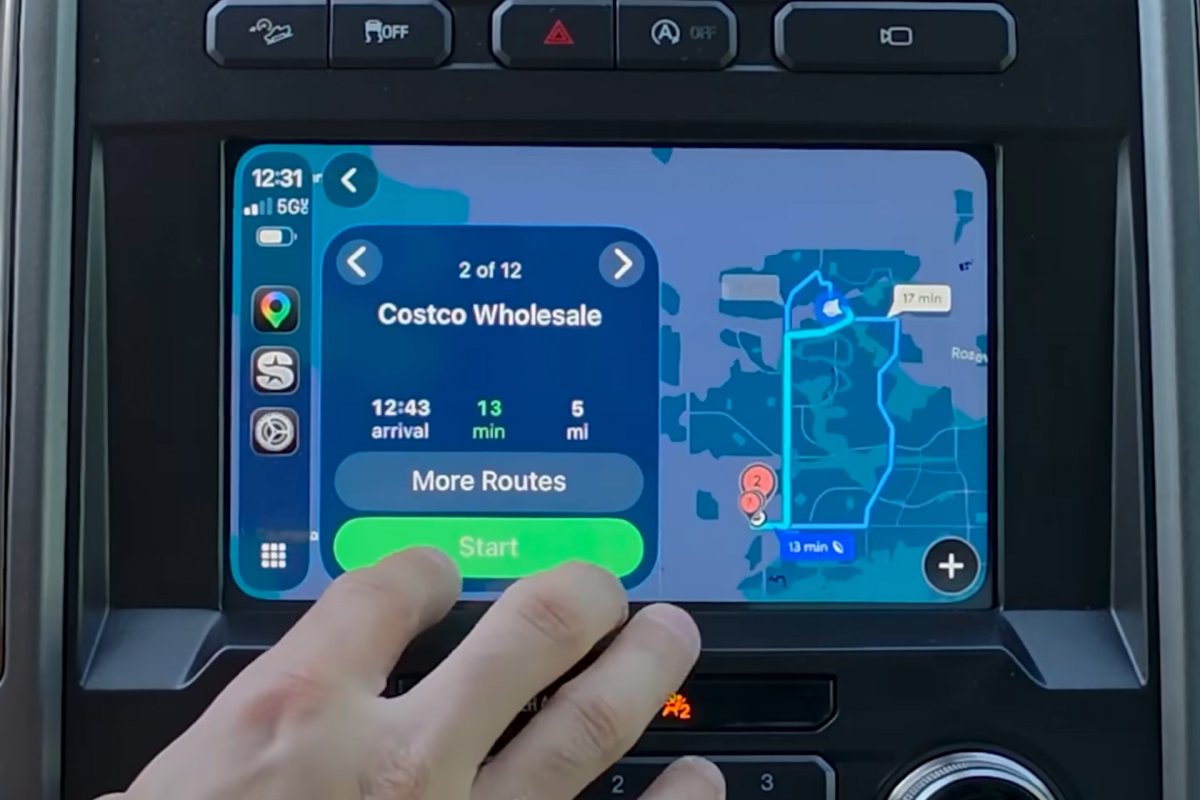
Have you noticed that Google Maps (or your navigation app of choice) doesn’t work as well as it used to? Maybe the quickest possible route still isn’t that quick, or those quiet backstreets that used to serve as a clever shortcut are now choked with traffic as well. It’s not your imagination. GPS-based routing apps have gotten worse, and while there is a solution, it might be more trouble than it’s worth.
It’s estimated that around seven billion devices worldwide rely on GPS. We’re talking everything from phones and dedicated GPS devices to running shoes and golf balls. GPS is short for Global Positioning System, a network of 31 satellites owned by the United States (but free for all to use) that can receive signals from terrestrial devices in order to determine location in real time. Services like Google Maps feed this location data to algorithms to calculate the optimal way to wherever you might be going.
The mass adoption of GPS has produced real benefits. A 2019 study found that, between 2007 and 2017, services like Google Maps saved 52 billion gallons of fuel and a trillion miles through more efficient routing. Another study estimated that $1.4 trillion in economic benefits have come from harnessing the GPS network since the 1980s. But in this case, it’s definitely possible to have too much of a good thing.
Today, too many people are using Google Maps and similar services for them to be effective. Or more specifically, they’re using these apps not just for directions, but to avoid traffic in urban areas. And because these apps don’t track how many users they’ve sent on a given route and can’t know where competitor services are sending users, it’s causing chaos.
Of course, that’s not all. There are many layers to this onion, and we’ve peeled them back in this video from The Drive‘s YouTube channel. Give it a watch and let us know what you think in the comments.
Read the full article here