

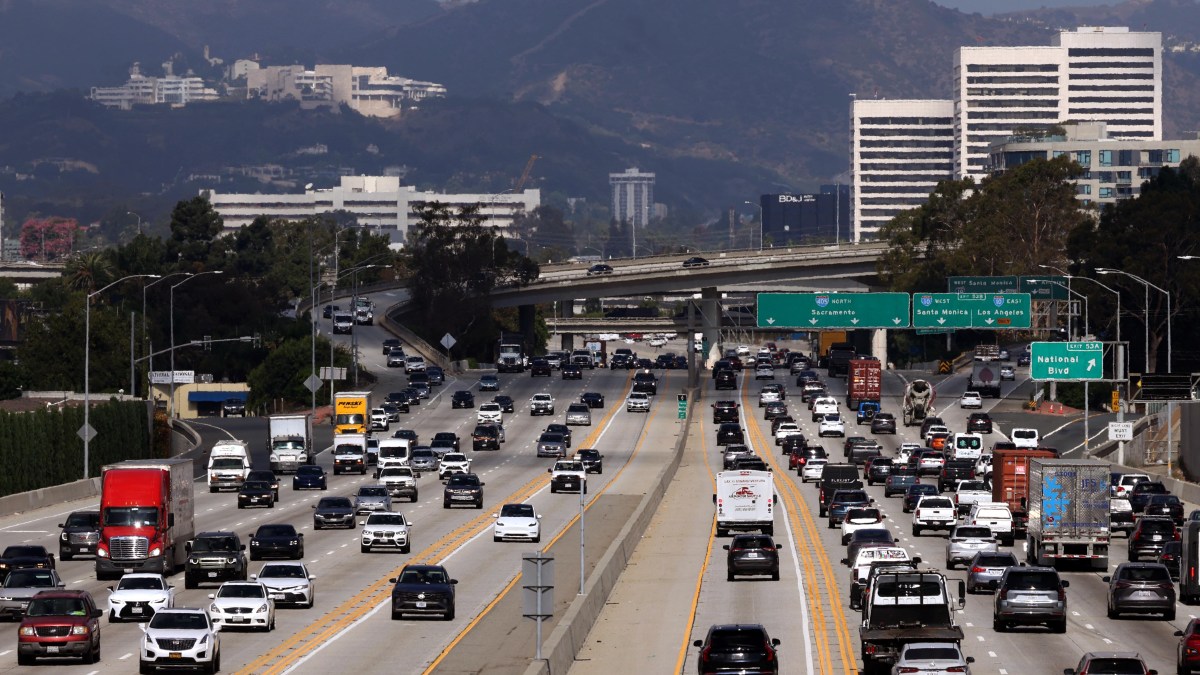
High-speed rail is a lightning rod for controversy, but that hasn’t stopped California from pushing to expand its next-generation transit network. And if you thought fast trains were a tough sell, just imagine how well the notion of 140-mile-per-hour bus service will go down. Nevertheless, such an idea is now being pitched. Though it doesn’t sound like high-speed buses would be sharing lanes with daily drivers.
Quick Download on California’s High-Speed Bus Plan
Here are the main factors you need to understand California’s high-speed bus proposal:
What is a “high-speed” bus? A “high-speed” bus has been engineered to sustain speeds between 80 and 140 mph for long express routes. High-speed buses need more stability than standard buses or coaches in order to maintain speed in curves while still offering a smooth ride.
Where can a high-speed bus operate? Anywhere a normal bus can, in theory. But in order to cruise at speeds exceeding about 80 mph, the road and bus both need to be built for it.
Where does California want these buses to operate? California wants to establish high-speed bus lines to reach more remote towns and tourist attractions that can’t reasonably be incorporated into its future plans for rail expansion, but they could be utilized anywhere with adequate road infrastructure.
The timeline: There’s no hard-and-fast timeline on this. Caltrans is pitching it as a companion project to its high-speed rail program.
The pitch: Cheaper than rail and more flexible, high-speed bus routes could connect residents and tourists with parts of the state that are only realistically accessible by car, expanding both commute and travel options while reducing congestion on existing roadways.
The catch: Truly high-speed buses are not off-the-shelf automobiles and require specialized engineering. Likewise, the roads required for sustained high-speed bus travel have special requirements exceeding those of normal highways.
Bottom line: There won’t be 140-mph buses in the carpool lane next to you any time soon. Existing highways simply can’t support those speeds, even without the gridlock of everyday traffic. This plan still has a lot of hurdles to clear before it can become a reality, but it would offer a more cost-effective means to reach far-flung parts of California with a public transit network.
140 MPH
That’s only the max speed, the California Department of Transportation (AKA Caltrans) says, but it is the target for a new network of high-speed buses intended to connect areas that won’t be directly serviced by California’s expanding passenger rail network. This bus rapid transit (BRT)-style network would utilize new dedicated, high-speed bus lanes that would run alongside existing passenger-car lanes. Think HOV, but with extra steps.
According to KQED, Interstates 80 and 5, along with U.S. Route 101, could be utilized to create high-speed connections between San Diego, Los Angeles, and San Francisco. Even at just 100 mph, the ride between L.A. and San Francisco would be less than four hours by bus, Caltrans feasibility studies manager Ryan Snyder told the NPR affiliate.
While that’s reasonably impressive on paper, it pales in comparison to the 2:40 proposition offered by high-speed trains. The upside? Buses would cost less, and the lanes required to operate them would offer far more flexibility than that of fixed rail. That means the network will cost less per mile than rail while offering fewer restrictions to boot.
So, what does this do that trains can’t? Put simply, it requires a lot less up-front investment in both a physical network and the necessary equipment (including the buses themselves) to operate it. Currently, neither exists. Sure, buses can be operated on existing freeways, but not at the speeds they’d need to in order to make the notion worthwhile.
Inaugural Ride on Miami-Dade’s FIRST Bus Rapid Transit (BRT)!
As we hinted at above, the biggest barrier to implementing a high-speed bus system is our current infrastructure. According to the report Caltrans published last year, U.S. freeways have a typical design speed of between 75 and 85 mph. These figures are determined by things like curve radius (how sharp the bends are), camber (whether the surface leans you into the turn or not), and surface quality/maintenance regimes (how many bumps you might end up with). A perfectly manicured concrete surface can support incredibly high speeds; let it heave in extreme frost and heat for a couple of seasons, and that’s no longer the case.
Other Obstacles
There’s more to it than that, including things like maximum grades and other factors influencing visibility, such as how far away from the edge of the road it’s OK for trees to be planted (or large signs to be placed). You also need wider shoulders and run-off areas, and better separation between lanes of opposing traffic in order to limit the potential for head-on collisions. Bottom line, Caltrans won’t have 140-mph buses tearing down the 405 carpool lane any time soon.
For something a little more robust than California’s existing highway network, Caltrans turned to its friends in Texas, who have been building highways designed with 85-mph speed limits in mind for decades. Hennessey famously used State Highway 130 to test the VR1200’s top speed (221 mph, if you’re curious) nearly 15 years ago. The Californians also looked at guidance published by Germany and Austria, which maintains a little motorway network known as the Autobahn, which famously incorporates stretches with no posted speed limit. At least, it does for now.
Bottom line? It’s feasible, but like any other transit option, it will take time and money—two things that tend to sink major infrastructure pushes. After all, who wants to lose their job by running on a transit network that might not even open in time to put their name on it?
Got a news tip? Let us know at [email protected]!
Read the full article here