






Taking a pulse of the auto industry a few years ago would have resulted in most people thinking, at least for a hot minute, that the immediate future was going to be electric with a quick and hard shift away from fossil fuels. Automakers started swapping gears and gas for batteries and inverters. Then it all fell apart despite everyone taking different strategies.
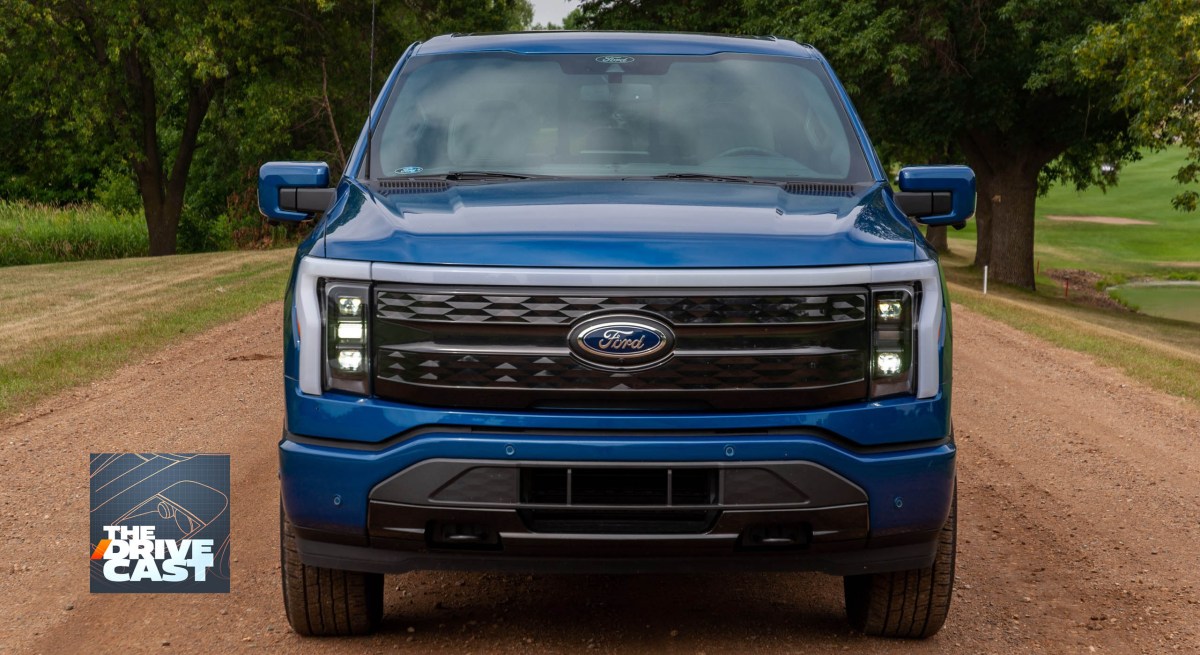
Ford made a normal-looking F-150 that just happened to be electric and resurrected the Lightning nameplate, then killed it. GM went all-in on a dedicated platform with huge batteries for mega trucks featuring eye-popping range. And Ram? It never even launched its electric truck with ridiculous specs before killing it off. But it was the startups, Rivian and Tesla, that laid blueprints for a path forward while competitors scribbled notes. Now we have round two on the horizon, but do electric trucks even make sense?
History books will show that the first-generation of electric trucks brought forth an arms race of who can do what, but things didn’t play out as planned or expected. These money-losing vehicles by many accounts can be filed as flops and false starts. While Ram killed its electric truck before even launching it, Ford bailed out on the F-150 Lighting, GM’s stuck with things, for now. But sales are about 3% of what the automotive giant has originally predicted. Now the next crop of electric trucks are taking shape with smaller footprints, smaller battery packs, less power, and less capability, but much lower price tags.
On the latest episode of The Drivecast we discuss the short-lived history of the electric trucks we saw come, go, and flounder, how we got here, where the market is today, what the next-generation of electric trucks look like, and whether an electric truck even makes sense.
New here? The Drivecast is The Drive‘s weekly podcast that takes you behind-the-scenes on the largest controveries, stories, and characters shaping the automotive industry along with the way our roads look today. Powered by The Drive‘s inside access, original reporting, exclusives, and insights, The Drivecast aims to make everyone an insider.
Listen to The Drivecast via Spotify, Apple Podcasts, or Amazon Music. Love it? Like it? Want to help? Leave a five-star review on your platform of choice to help get The Drivecast in front of more people. Have a suggestion, tip, request, or feedback? Drop us a line at feedback@thedrive.com. I promise, we read every single email.
Full Transcript
Joel: Today, we are talking about electric trucks. For a hot minute, it looked the immediate future was going to be electric with a quick and hard shift away from fossil fuels. Automakers were swapping gears and gas for batteries and inverters, but some moved quicker than others and everyone went about it differently.
Andrew: It’s been interesting to see different adoption strategies play out, right? Ford made a normal-looking F-150 that happened to be electric. GM went all-in on big battery mega-trucks. Rivian built a lifestyle brand around a tech-forward product and, of course, Tesla gave us the chrome dumpster of doom. Plenty of other automakers stayed in wait-and-see mode, too.
Joel: From literal heavyweights with insanely huge battery packs and eye-popping range figures to industry-leading innovation and out-of-the-box thinking. Just like gas-powered trucks, the boom of the first generation of electric trucks brought forth an arms race of who can do what and how. But the history books will show that the first shot at electric trucks didn’t play out how everyone expected. Arguably, these were money-losing vehicles that, by many, are viewed as a flop and false start. Now, a crop of next-gen EVs are taking shape and of course, because this is America, trucks are at the forefront and leading the charge, no pun intended, with a bevy of body style variants set to follow. But these next-gen electric trucks are vastly different than what we’ve seen to date, and arguably will change the industry. From the price and capabilities to their size and even how they are built, we are about to witness a possible revolution as automakers scramble to fend off the Chinese, appease America’s appetite for trucks and SUVs, and push into the electric era. Then there’s the outliers and noise: the resurgence of V8s and the lack of hybrids, the supposed extended-range electric vehicles known as EREVs, and even a back-to-basics gas-powered idea. So today, it’s all about electric trucks, what happened, what’s coming, and does this all even make sense?
Joel: All right, so real quick, let’s just give context for the listeners as to us and our backgrounds, you know, where we live, how we use vehicles, trucks and SUVs, use cases. I just think it’ll help people understand a little more context for our lifestyle and our viewpoints on how we come at some of this stuff.
Andrew: Sure. So I live in a rural suburban-adjacent area. I’m two hours from New York City, but I’m also surrounded by woods. I use trucks for standard dump runs and Home Depot runs, but I also do a lot of off-road driving. I actually work as a part-time guide over at a local off-road training school, so I spend a lot of time thinking about the science of off-road driving specifically, and I will say electric trucks, it’s a unique experience. We can come back to that a little bit later.
Caleb: Yeah, and I live in the Missouri Ozarks, about 18 and a half hours away from New York City, so, you know, a little bit further than Andrew. But yeah, I mean trucks are everything here. That’s what everybody drives, that’s everybody’s first vehicle, that’s what they learn to to drive on. And so that’s really just the vast majority of my experience, you know. My first vehicle was a 7.3 Power Stroke Ford F-250, old body style. Man, I never should have gotten rid of that one. But that’s the world that I come from, right? So that being said, I do have experience with electric trucks as well, but I think my background in regular old body-on-frame, you know, archaic type stuff definitely helps inform what what I think about these rigs and what they do well and what they don’t do so well.
Joel: I also live very far from Andrew and the New York City. I’m sure people know from previous podcasts, so I live in Minneapolis, Minnesota. We have a family cottage up north and so, you know, we tow boats, we drive in very cold weather in the winter, we all run winter tires, Nokian Hakkapeiliittas, got to love them. And so, you know, I got two kids and a wife. We’re hauling around soccer gear and whatever. But really, the towing the boats, driving in the cold, the snow, etc. My first car was a Jeep Cherokee XJ, so the definition of an iconic SUV. We’ve owned a lot of Jeeps, we’ve owned a lot of Quattro from Audi. But everything we own, nothing my wife or my dad or I own at this point doesn’t tow 7,000 pounds. You know, we have boats that weigh 5,000 pounds, you need a 20% gap just to have some safety gap there. And so I do a lot of towing, usually short distance, just I really do want to put a context here. You know, typically the distance that we’re towing the boats is short, and that can be up to about 180 miles of towing at one shot. So that’s the context on the towing aspect and the weights and everything like that. And Andrew, I’ve done a lot of off-roading in gas and EV powered vehicles. So with all that context, real quick before we get into the topic, I want to just give everyone some context on our personal feelings on EVs in the marketplace as a whole. Andrew, let’s circle back to you.
Andrew: Yes, absolutely. I like EVs, full stop. I am an old-school guy, borderline luddite when it comes to technology in general. I own, I think, four carbureted vehicles right, maybe five, right now, but I absolutely appreciate the benefits of electric, both in terms of emissions and just simplicity. It has a lot of practical benefits off-road, too, frankly. And so I’m pro-EV, broadly speaking, I just like my gas, my old-school gas as well.
Caleb: Yeah. So for my part, probably the most memorable experience that I have with an EV is I tested a Polaris Ranger Kinetic. They built that electric side-by-side, and we use it—our family owns a campground here, and I had a canoe trailer that was down the road a ways, down the dirt road, and the wheel fell off. And so we actually used zip ties and a T-shirt to make a wheel bearing, a makeshift wheel bearing for that canoe trailer. And we towed the canoe trailer back with that electric side-by-side. It was great because, you know, you could just go at a steady two miles an hour, right? It was the perfect vehicle for the job. But that actually has been one of my favorite side-by-sides that we’ve tested. And the reason I think that’s even relevant to this conversation is because we used it to work hard, right? I tested that for quite a while, honestly. We used it during flood cleanup, I hauled a ton of brush, a ton of logs with that thing. So in the sense of EVs doing work, they’re absolutely capable of it, but it’s just kind of like, you know, what’s been brought up already, range tends to be a big issue. Whenever you’re using it at one property, that’s not such a problem. You know, I could go a week without charging that side-by-side, but if you need to be towing anything for 100 miles or more, then you run into problems. So all in all, I also am impressed by EVs, what they’re capable of doing. Ford F-150 Lightning, you know, as we’ll get into here in a little bit, but I also don’t believe that everything is set up perfectly for those to work for the majority of people where I live. Obviously, difficult for me to speak for anybody else that lives somewhere that’s more urban or suburban. I really am just quite rural in general. So different strokes for different folks, I guess is where I land.
Joel: Yeah, and it’s funny because if you read The Drive and you’re a commenter, you would think everyone that reads The Drive and is a commenter thinks I hate cars that hate gas engines when I own a V8-powered Grand Cherokee, which by the way, that’s a life choice. Most Grand Cherokees are not V8-powered, by the way. There is no question that there is gas running through my veins. At the same time, you know, I drive something like an Escalade V with a supercharged 6.2 V8, right, and I’m sitting there idling at a bus stop and I’m like, this is kind of dumb. I almost feel obnoxious. I’m just what, killing the planet and drinking 91 premium at the rate of zero or negative miles per gallon? It’s crazy. And so I’ve driven a bunch of EVs that are just so capable on-road, off-road, a Lightning, I’ve towed with these. They’re really cool, but to Caleb’s point, depending where you live, range in the winter can be an issue for some people, charging can be a real issue for some people. So I think that it’s not a one-size-fits-all situation, especially in the current timeline. It’s a use-case situation. I mean, I really like EVs and I really like gas-powered cars and I think each has a place kind of, in the grand scheme of things. So with all of that said and the context on our backgrounds real quick, let’s get into the topic at hand. So which of you boys wants to get into the quick history rundown of of these early electric trucks where we had and have?
Andrew: I think I can run you down pretty quick. So basically, you know, we’ll definitely want Caleb to chime in with the F-150 Lightning launch experience, but I feel like that was kind of F-150 Lightning was the moment where people were oh, electric trucks are going to be real. I mean, Rivian R1T was was around, too, but that had the novelty of what is this weird brand? When Ford was doing an F-150 Lightning, people were okay, electric trucks are happening. And I do think that kind of, you know, egged on GM to get us to the Sierra and Silverado and, of course, ultimately Ram, which we’ll we’ll circle back to. So yeah, so we had that, we had Ram promising to build a super high-range the REV that I remember seeing at New York Auto Show a few years ago. And that ended up I don’t know I don’t want to go out of order here, but basically that was totally scuttled, ultimately, and that’s now a range extender and I think it’s mild hybrid now, right, Joel? Is that right?
Joel: It’s a whole mess. They brought the V8 back, it was a mild hybrid, but then they’re killing the mild hybrid because, you know, car guys don’t want a mild hybrid, we want a simple V8 with a with a whatever. Caleb is literally shaking his head like at the—
Caleb: Well, because I don’t even remember what the range extender one is called anymore. It’s been changed—
Joel: Yeah, it’s bad. So now it’s called the REV, right? So the range extender was originally called the Ramcharger, and the REV was the electric one. And now the Ramcharger’s going to be the three-row SUV Wagoneer rebadge, and the REV is going to be the range extender, and none of us, no one ever drove the electric REV. The electric Ram, it was DOA. We were going to have a 500-mile version with like a 200 and fifty-some kilowatt pack. It was going to it was, dude, it was going to easily weigh like 10,000 pounds. There’s no way that thing wasn’t going to weigh 10,000 pounds. It was crazy. It never it never got off the ground. I look, you know, the Rivian R1T and the Cybertruck and all these things that debuted and or launched, but the Ford F-150 Lightning, an electric F-150 that looked like an F-150 and it drove like an F-150, that was a moment, right? Because America runs on F-150. It’s the best-selling vehicle in America. It’s not even a contest. And so when Ford said we’re doing an F-150 that’s electric and we’re calling it an F-150, that that felt a stake in the ground of this is the future, guys, this is happening. This is happening.
Caleb: Definitely. And like whenever, so I was part of that that press launch, so we showed up, they did it in in Texas, I believe it was San Antonio, and so you show up in truck country and it’s like there you go, you have this lineup of trucks that look F-150s, just kind of different. And they had all of these tests lined up for you, you know, obviously you do your normal on-road driving, but they had an off-road course there, they had several different trailers, you know, set up for you to tow. And I remember I got to a stoplight getting ready to go onto the interstate. And so the on-ramp was uphill and I think I had 7,000 pounds behind me. So, you know, a decent load, not the max, but, you know, pretty high. And I just romped it and it was diesel but with no turbo lag. It just went, and I was okay, here we go. So from that moment on, man, I was pretty convinced that we were onto something, but the market had different plans.
Joel: All of these trucks were expensive. All of them. The Lightning was supposed to start at $40 grand. I don’t think one ever arrived for $40 grand, ever. It was the Model 3 that was going to be $35 grand, right?
Caleb: Yeah, well, it was but it was the Pro that could only be sold to fleets, right? And then they were like, actually, actually, we’re not going to do it. Yeah, yeah, and it was no time and they were $60 grand.
Joel: Yeah, so they were, so the average Lightning, the Lightning you wanted was $75 grand first of. The Lightning that got bought was $95k, okay, first off. Okay? Second off, these were all expensive. The Rivians, they launched at $70 grand. Those Bosch motors, they launched with four Bosch motors per truck. They were about $5,000 a piece. It was like $20 grand of motors in those original trucks that launched originally $70,000 before you account for the battery pack. They lost their butts on those first trucks. And then they did the price increase and there was backlash, so they had to grandfather everybody in. But now the Rivian you want is basically, let’s call it $90 to $130 grand, okay? And then you’ve got the the GM twins or trio: the Hummer, the Sierra, and the the Silverado. These trucks have 205 kilowatt-hour battery packs. These things go up to 470-some miles of range, but they weigh 9,000, 8,000 pounds. Like, they have so much range not because they’re efficient. They have so much range because they have a really big tank. They are inefficient vehicles of the highest caliber. And which is not the future, right? Like, that’s the opposite of what we’re trying to do here. But they have a lot of range and capability. The two things that I want to mention before we move on are what I would consider a success: the Rivian and the Cybertruck, and just hear me out before you roll your eyes about the Cybertruck, I am not a fan, okay? But these two vehicles innovated and paved a path forward. And the reason I’m going to say that is because they are a clean-sheet dedicated vehicles with no compromise packaging. And I want to explain that. The Rivian is so capable off-road. It is so surreal on-road, which I know Andrew is shaking his head yes, and you all just can’t see this, he agrees with me. And it is ,the R1T specifically, the truck, is the most innovatively packaged modern vehicle money can buy no matter how much you spend. It is the most innovatively packaged vehicle. And it shows truly what you can do with a clean-sheet EV if you set your mind to it. And then and then on the other end of the spectrum, you have the Cybertruck. Just hear me out. It runs a 48-volt system, it runs Ethernet, it runs CAN bus systems that I’m sure someone’s going to be more knowledgeable about than me. These are innovative things that most modern mainstream cars don’t have. And more importantly, more importantly, it modernized how you build cars, right? It is, I believe, the first truck that has megacastings, which means there are just like three main or four main components to that truck’s sub system, like beyond the metal exoskeleton dumpster-looking awfulness, that bolt together and glue together and that you can remove one, add one back. It’s built to be when you crash it, you can actually replace just certain parts of the subframe stuff that glue back on or bolt back on. It’s really cool. And so those innovative things that I just mentioned from both these things, we are going to see play out in other vehicles we’re about to talk about. So they laid the ground game in what we’re going to see. And innovation usually costs a lot of money initially. It just is what it is. Look at anything, whether it’s LED lighting, touchscreens, Bluetooth, infotainment, all that stuff, it came to expensive cars first. And so certain things, the Rivian, the Cybertruck, there are things about these things that are not failures, and they’ve paved the path forward. Now, where are we going on that path forward?
Caleb: Well, and that’s where, you know, it’s easy to dunk on the startups that go nowhere, right? That have these wildly different ideas and don’t have either the engineering or the financial backing or the design or whatever to make it happen. Everything that we just talked about right there are some big-name players that fully bought into this. And so that’s why I think, you know, people can be forgiven for believing that electric trucks were were imminent, is because you had Ford, GM, Tesla, and Rivian who is no longer a startup, right? Those are those are all real players in the space. Those are the ones that you’re going to see continue on building electric trucks into this next, you know, we say next generation, it’s really a, it’s a new iteration of what electric trucks probably should have been in the first place, right? So they had to launch with those six-figure trucks so that way, you know, they could actually afford to put these out, even though, like you mentioned, Rivian lost a whole bunch of money. But none of those were obtainable by average people. That’s what we’re looking forward to with Ford’s $30,000 electric truck, right? This one that seems to be smaller than a Maverick, one that you could actually buy, park in a city, get around easily. That is supposed to be another Model T moment that changes the way cars are built. And Ford has put so much into that. You know, if you’ll remember our friends at The Autopian, David Tracy was chasing this prototype down the road, you know, like it was in full camo and he was pretty much like getting up in the driver’s face like, “We saw it, we saw it.” But that truck had a QR code that you would scan, it would take you to a launch page or whatever on a Ford website. And I mean, they know that this is a big deal. They know that once they unwrap this thing, that there are going to be people who are interested, and arguably even those who aren’t into any other EVs. And I think that’s the part of the market that Slate was able to grab hold of, right? Luddites like Andrew and and maybe like myself. You know, it’s somewhat common, you know, for my friends that I don’t necessarily talk about cars very much with to reach out and say, “Hey, what do you think about this? What do you think about that?” But very few times have I had as many people come to me as they did about Slate. Those that see a super, super simple single cab, you know, like build it into an SUV if you want to, wrap it yourself, hand-crank windows, like I have a buddy who that is him to a T. And it doesn’t matter if it has 150 miles of range or whatever the heck, right? $24,950 starting price before destination, so obviously that’ll end up being a little bit more. But I think that the response to Slate should be a huge encouragement to Ford, because there are people who won’t buy into a new startup automaker because they don’t have the the recognition. Many more people, if I had to guess, would buy into a Ford knowing their history with trucks, right? So to me, those are the two standouts, but they of course aren’t the only ones that are coming.
Joel: So Ford’s $30,000 electric truck, right? First off, that is one of like five, don’t quote me on that, something like five vehicles that are going to come on that platform, right? They’re just starting with the truck. It’s going to be about the size of a RAV4 inside, then it’ll have a very small bed. It’s going to start about $30 grand. Unclear if the one you want is going to be $30 grand. Let’s, you know, very big asterisk. Unclear the mileage and range out of this truck and different battery packs and all these things. I believe it’s going to be LFP. That does change the factors for the cold. But this is going to be a small truck. This is not this is going to be the size of a just a little bigger than the Slate. Like, this is not a Lightning replacement. And what I really want to talk about there is the Lightning was supposed to get a second-gen truck. It was originally going to arrive in like 2025, then 2026, then 2027. At one point, Jim Farley, CEO of Ford, called that truck the Millennium Falcon of trucks, which I’m not sure if Mr. Farley’s seen Star Wars and understands—
Andrew: Yeah, that’s not a good—
Joel: —that was a really interesting comparison, I got to be honest, but like I think it was one of those things of look at this bucket of bolts, we’re going to—
Caleb: “This is the Titanic of EVs, baby!”
Joel: Probably not the—
Andrew: Maybe not what you’re looking for, yeah.
Caleb: “This is the OceanGate Explorer, baby!”
Joel: Probably not the best qualifier, but what was interesting was this was going to be a big truck. This was going to be a future-forward, it was probably cab-forward, I believe, based on the patents we saw. We’re talking about like they patented swiveling seats, they patented like a desk that folds out, they were looking at this being like a remote office. This was going to have a frunk that you could configure with different shelving units. Again, we saw all the patents for these different things. This new $30,000 truck is nothing like that. Let’s just, you know what I mean? Like, this is going to be a simple, back-to-basics truck. It’ll have a touchscreen, of course, but like, you know, I doubt it’s going to have climate control knobs because even a Maverick doesn’t now, right? It wouldn’t be surprised if it has a screen out of a Maverick. So it’s going to be a different truck than what we were had and are going to get. It’s not going to be something that’s towing our boats. And also, the way they’re building it, they’re looking to revolutionize the assembly line. That’s what they their words are to be clear and not mine. Caleb’s laughing at me. But the interesting thing is, and and Andrew wrote a whole story about this, is the skateboard situation, like three lines merging into one, but the point where I was going with this is they’re taking a play out of the Tesla Cybertruck book. This thing’s going to use megacastings. It’s going to be cab-forward, and it’s going to have like three or four main components that all bolt together so it’s simpler to build, it’s simpler to repair, and it’s a simpler truck. Like, they this came from a Cybertruck. And I think that’s really important to to give credit to the rolling chrome dumpster for, I guess. You guys are like looking at me like I’m an idiot.
Andrew: Do you guys think there’s any chance that the Ford truck will use a midgate like the Sierra Silverado EV have or like the Chevy Avalanche had, where—
Joel: No, that’s way too expensive for this price point, no way.
Andrew: Dang it, because that would be awesome. I was so impressed with that in the Sierra EV. I was so. If you got a little bed, this is the perfect supplement. All right. Because that’s always my thing with these tiny trucks, right, like these Maverick-sized trucks. It’s like the bed, it’s good it’s good to have a bed and yes, it’s nice to be able to to carry around filthy things, but like, if the bed is less than 6 feet long, it’s just kind of, I don’t know, I’m like—
Joel: I’m glad you brought this up, Andrew, because something that Caleb alluded to that we didn’t get to was a startup called Telo, T-E-L-O. Telo is exactly what you’re talking about. It is a very small truck. The standard bed is like 60 inches long, okay, but it has a midgate and it will fold down and then with the seats, right? And it’ll allow you to extend that bed without the actual bed extending to like 8 feet. And it’s supposed to be a truck that is all it’s like it’s kind of like the Mini Cooper, like there’s no front end almost, right? It’s a cab-forward design, just crush up there. And basically, supposed to hold four adults the size of like me, you, and Caleb. And then have a bed behind it, and it’s supposed to have rapid fast charging, like a really expensive EV. It’s supposed to be able to, I don’t remember the exact range off the top of my head, I don’t remember any of the actual specs. We don’t actually have, by the way, all the specs yet. Like, this is not in production. But they are looking at what they’re looking at like it coming later this year, hopefully. Like, we’ve seen it, they’ve got preproduction trucks rolling around LA. We’ve seen photos of it, so that’s an and this is the same size like that Slate and Ford situation.
Andrew: When it comes to capability, especially and this is especially relevant to electric trucks, I don’t mind if it can’t do everything at once if it has multimodal capability. Like, I don’t need to be able to haul five people and 1,500 pounds worth of lumber. I’m fine if it can do a lot of cargo and one person, or a lot of people and no cargo. Like, it’s very, very rare that I’m doing everything at once. As long as like if you’re going to have a small platform, if you can if you can like kind of cycle between jobs, that’s how I think you get a winning formula with these small trucks.
Joel: I want to go to Caleb, but I did look up the Telo specs that I didn’t have off the top of my head: 4-second 0-60, 350 miles of range, all-wheel drive, $40 grand.
Andrew: Wow, yeah, that’s that’s pretty—
Caleb: Just what everybody wants in a pickup truck.
Andrew: Yeah, right.
Caleb: You know what I mean? The thing, you know, Andrew, you’re talking about it doesn’t have to do everything all at one time. What you have to remember about about truck customers, of which I most certainly am one, is that like they’re probably just going to do it anyway. You know what I mean? Like, the idea that like people in the cab actually affect payload, like there’s going to be a lot of old boys that don’t really heed that. So it’s funny because you have those that like totally know everything, like they know the doorjamb sticker by heart, they can tell you GVWR, no problem, and then there are those who are like, “What are you talking about? Google says I can do this and also this,” and they assume that it means at the same time. Oftentimes those people end up buying a dually Ram with a Cummins and they put the 6,000-pound slide-in camper in the bed. But again, that’s that’s not a knock on truck drivers, that’s that’s I am one of you, okay? It’s just people overestimate.
Joel: I think part of the issue is is that, you know, a lot of these truck owners, they’re they’re taking their kids to hockey. They’re taking their kids to soccer. They’re doing what I’m doing, right? They’re most of these guys aren’t even ever towing. Their receiver’s probably never seen an actual hitch put into it. And I think that the issue here is is that people aren’t buying what they need, they’re buying what they want. They want a big F-150. They feel safe, right? They’ve got all the room in the bed for the soccer the hockey gear, the soccer gear, whatever. And they’ve got all this space in the back. Gas is expensive. I don’t know.
Andrew: That’s going to be that’s kind of what makes me so fascinated by Slate, just like and what they’re going to do because they have the aesthetic like absolutely nailed. It’s like that is that is old school truck, like perfectly. And it’s not going to be that expensive. It looks cool, exactly. But, but, critically, it’s it’s little. So it’s going to be really interesting to see. I feel like it’s a put-up-or-shut-up car. Like, if you’re like, “I want an old truck,” like, bro, there it is. Like, that’s your old truck, that’s a modern truck, but yeah.
Joel: Caleb’s got kids, I got kids, right? Like, by the time you install rear seats, your bed’s going to be now tinier, right? And I’m not sure my kids are going to be on a daily basis excited and jazzed about the idea of me having to flip forward the front seat so they can get into the back seat in and out of school constantly every day and functionality-wise, it’s not a great family car, it feels like to me. But to your point, it looks cool.
Andrew: And Joel, you’re you’re touching exactly on why people didn’t use pickup trucks as daily drivers 30 years ago because it doesn’t make a lot of sense. Until we made everything crew cab and everything actually a family car because, like as we’re saying, like a lot of people just want to just want to look like they’re driving a truck.
Joel: I don’t even know if there’s a Costco buy where Caleb lives, and that’s not a like a dig or a joke.
Caleb: I live in Walmart country, we have Sam’s Club, baby.
Andrew: Yeah, right, right.
Joel: Okay, so you’re about to prove my point, okay? You get in a Ram 1500, an F-150, a Hummer EV is actually changes the game because it’s got the four-wheel steer, right? And it’s a little shorter than those bigger trucks. But like an F-150 or a Ram 1500, the parking lot is littered with them. And I got to be honest, it’s a pain. Like, that’s a full three-point turn truck. It’s kind of a nightmare, and I look at these guys that own these things and I’m like, you drive this everywhere? Do you need to? Do you want to? You don’t find this to be a pain? Does it fit in your garage?
Caleb: Dude, I got a crew cab long bed F-350, all right. It’s a big truck, and I drove it to the airport, got there early, you know, there was nobody beside or behind me. I get back a few days later, I got cars right beside me, and no kidding, there’s a Jag right behind me. Like, across the aisle, but there was not enough aisle for me to turn that thing around. It was an easy eight-point turn. And uh,
Joel: Eight-point turn. I’m going to include that in the title of this podcast: Eight-point Turns. See, but you’re not going to have that situation in a Slate, a Tello, the Ford’s upcoming EV. Like, these are smaller trucks. And and by the way, all of these small trucks—so let’s say you don’t want to start with the the Slate because it’s too basic, and let’s say you don’t want Tello because it doesn’t look conventional and you don’t trust it, I don’t know, whatever. So let’s say you want the, Ford, you’re like, “I’m going to buy a Ford, I trust Ford.” So let’s say you buy this $30,000 EV. If it has a 4-foot bed and you can fit it has the interior room of a RAV4 and you can get it for, let’s call it $35, $38 grand. I think the average market price of a car right now is $52k, I think that just came out this week or last week or whatever. So yeah, you could put your kid’s hockey gear in the back and it wouldn’t it wouldn’t smell. You could put your kid’s soccer gear in the back, you’re going to fit your kids. Is it going to have the F-150 legroom? No. But could you fit in your garage? Yes. Is it going to be a pain in the butt at Costco? No. I think that it’ll be really interesting to see how the market responds to these new, smaller, cost-effective pickup trucks in an era where the average car costs $50 grand, the average truck costs $66 grand. And by the way, that’s not EVs, that’s just cars.
Andrew: It would be great if this little EV moment kind of like railroaded us back full circle to a smaller, more practical vehicle.
Joel: That cost less money. Wouldn’t that be like ironic? Heavily ironic?
Andrew: It would, it would be very funny. But I mean, I’m for it, I think it’s great.
Caleb: I got a deep pull for you, all right? Canoo. You guys remember Canoo?
Joel: Oh my God, dude, I was so excited about Canoo. It was so cool.
Caleb: It was going to be so cool. They were going to put a stinking thing on the moon. You talk about a truck that can also be a van that can also be a this or a that. Dude, I so, there for a hot minute, okay? They were like headquartered less than an hour from my house. I was driving back from the airport, maybe that same time I got stuck in the parking lot, and I passed a Canoo prototype. And I was like, those are going to be so sick. Of course they never came to be, but
Andrew: So for those of you at home, that’s spelled CANOO, not canoe like the boat. This was a little like pill-shaped vehicle, basically, yeah, that could be a pickup truck, it could be converted to a van, it was a very and Walmart was going to buy a bunch of them, speaking of Walmart country, and then what was the what was the actual death? Like, they they just ran out of money or something, like how did they
Joel: Dude, they they blew through management and they changed their business model at one point, like they were going to be like lease-to-own or fleet-only, like they started out with a really great concept. They didn’t move quickly, they ran burned through a bunch of cash, they had a bunch of management shifts, then they had a bunch of business like actual plan shifts. And dude, as soon as they started burning through CEOs and and they changed the business model, I was like, that and it’s dead.
Andrew: Yeah, too bad. It it was quite novel looking, but yeah.
Joel: So, couple other things I want to talk about real quick. So let’s we did mention this in the intro, EREVs, extended-range electric vehicles, and hybrids. So hybrids are absolutely having a moment if you look at the sales data, right? Ford sells a grip of PowerBoost, Toyota’s got a Tundra that’s a hybrid that we’ve had a whole podcast about reliability about, Caleb and I did. EREVs, we do not have any EREV pickup trucks. EREVs are extended-range electric vehicles, basically the idea is, it’s like the Chevy Volt. You’ve got a really big battery pack, let’s call it 100 kilowatts, 100 kilowatt-hours, right? And then you have a, in the the sense of the Ram, you have the V6 we all know, Pentastar, iconic engine at this point, hilarious, under the hood. But that Pentastar V6 does not connect to the wheels, doesn’t drive the wheels, it provides power to the battery, acts as a generator. The battery then sends power to the electric motors, there is no clutch, there’s no connect, etc. So now we’ve got Ram that’s delivering the REV, which to be clear is no longer an electric truck, it’s an EREV. That’s coming. We have the next-gen Lightning, supposedly, coming with an EREV powertrain that is going to be a quote air quote freight train and have like 750 miles of range and tow all the things. And then GM has said they’re working on hybrids. They were not real clear if they’re hybrid hybrid or like EREV hybrid. My gut tells me hybrid hybrid. And and so and then we’ve got Scout. Scout with the buttons and the knobs and the and the iconic name and design. They’ve got electric vehicles and then they have EREVs, and now everyone, 80% of the people that reserve Scout, have reserved an EREV, and so they’re going to do the EREV first, if they actually produce the car.
Andrew: I think a hybrids are amazing. I think that is like conceptually the most logical like setup. EREV, I really like the idea, I guess I’m kind of conflicted on EREV, actually, because I’m like it it seems like a maintenance nightmare. Like a motor that only occasionally runs, like in my world of maintaining power equipment and ATVs and chainsaws and quads and stuff, it’s like the the engines have the hardest life when it’s like run briefly and hard and then put away for months, so it’s just like oh God, there’s such a pain to keep alive. So I worry that that will like rear its head in the maintenance of these machines, but we’ll see, we shall see. Caleb?
Caleb: I don’t know, I don’t know how I feel either. You know, like with the with the Scout, okay? I think they nailed a lot of parts of that truck, right? Like the vibe of it, I do really think that they got right.
Andrew: Design is perfect. Yeah.
Caleb: Design is sweet. Dude, whenever you were sending me, because you were at the event, right, where they unveiled that? Dude, you were sending me pictures of the bench seat in the front, I was like, yes, oh, that’s that’s it, that’s it. And I don’t think that, you know, an EREV takes away from that. I just I have a gut feeling they are going to regret not offering at least a regular hybrid. I think that a lot of people who even know what an old Scout is are going to be like, “I don’t want anything that’s that runs on electricity.” Maybe not, I don’t know, but
Andrew: Yeah, I agree. I think, yeah, mild hybrid on that maybe would have, no question it would have sold more quickly. Let’s be real, no question.
Joel: I got to just say, I agree with Andrew’s initial knee-jerk reaction. An EREV, it seems like a great idea. It’s going to run forever when I run out of juice, I have a battery, I can tow forever, whatever. But like couple things. One, we backwarded the math on the Ram thing with the Pentastar V6 and the EREV, and I think once the juice runs out, we mathed it to something like, I don’t know, 18, 19 miles per gallon right. It’s going to get what a Pentastar V6 gets on the highway, but now you’re dragging a 100 kilowatt-hour battery pack along. That’s dead, first off. So now it’s just as efficient as you’d just bought a regular V6 Ram. Second, the duty cycle, what a nightmare, right? This is not a Volt, this is a pickup truck. And you’re starting and stopping and the engine cold and all that stuff, how long does it warm up, how often you changing the oil, all these things. But most importantly, the complicated nature. It’s not a regular hybrid. It’s an EREV. And it’s kind of like the worst of all worlds. Like, I’m carrying two powertrains with me now, guys. Like, not one powertrain that’s integrated together. I’m carrying a gas engine, so when I run out of juice, I have a generator built in because then I don’t have to carry like a Honda generator in my bed. What if you just had a big enough battery and didn’t run out of juice and we had a better charging network? What if we’re focusing on the wrong problem? Like, what if trucks just charged fast and we had chargers?
Caleb: Quit, quit getting logical, stop it.
Andrew: No, over the course of the last 20 minutes I have been like, oh, EREV kind of makes sense, and then it’s just like, no, no, I don’t like this anymore.
Caleb: Well, dude, just think of it, right? Like, like Tom and and and Joey and all these guys are going to be like, “Hey, come get in this new it’s electric, but it’s not,” you know. Hop in, and he’s going to take them for a ride, he’s going to do his 0-60 launch, and they’re going to be like, “Wow, this is amazing.” And then that Pentastar V6 is going to kick on and it’s going to go grrrrrr, and they’re going to be like, “What’s that?” And he’s going to say, “Oh, it’s just the battery charging.” That’s a cool that’s a cool thing, that’s a cool thing. I got a Pentastar. Like, no, dog. I don’t you think they’re ever going to even charge it? Like, are the good old boys going to charge it?
Andrew: Oh god, this was a, you know, funny you should mention that. Even this has even been a problem with Volt people. I remember um, you know, Matt Farah, Smoking Tire, he was telling me somebody he knows had a Volt and had owned it for years and never charged it. He’d borrowed it and he was like they were like, “Oh yeah, the car’s been driving like shit for years.” And he was like, “Yeah, it’s there’s no power.” Like, you’re using you’re running off like the backup generator. I was like, so yeah, it’s I yeah. I think mild hybrid is great, EREV, I’m not so sure.
Joel: Let’s wrap it up here with some final thoughts. So, I think we went into this, okay, just to the context in there, like the genesis of this episode was, you know, we had the confluence of Slate, we had the confluence of Telo nearing production this year, Ford’s been now talking about it’s $30,000 truck that’s coming. And and you know, we’ve watched everything else that’s happening, it’s just time to address it. But the question, like the working question was, do electric trucks make sense? Do EVs make sense for trucks? And so I think that I want to come full circle and just kind of have each of us address our thoughts on on that.
Caleb: Okay. So this is simply it, okay? As someone who acknowledges that whenever they have range, electric trucks tow phenomenally, they have great weight distribution, they just go, they’ve got so much power, all of those things, right? The fact that Ford, Chevy, and Ram are not trying to make their heavy duty pickups electric tells the story.
The fact that there is no electric Super Duty or Ram HD or Silverado dually electric version coming out, I think is a pretty good sign that even they know it’s not where it needs to be yet. Capability-wise, performance-wise, sure, right? But it’s not time for that yet. And whenever you’re talking about the types of customers who are buying those, you know, it’s like I hear somebody that drives a, you know, an F-450 that’s just out of warranty, you know, they complain about, you know, price on this or that. I got to, you know, like diesel trucks are expensive to maintain, too, but you’re not you’re not replacing a a wheel motor, right? And nobody is doing an electric solid rear axle in mass like that yet, even though such things exist in concept.
I think that tells the story. That yes, they can do truck things, and they can do it really well, but they can’t do it in the circumstances that normal true truck people, true truck people “air quote” can tend to use them in. Air quotes, right?
Joel: All right, all right. Andrew, what’s your what’s your thought? What’s your take?
Andrew: I’ll speak to the off-roadiness a little bit, because Caleb was talking like commercial-related stuff. So, a lot of, one thing people reference a lot is, oh, you got that low-end power, which is great instant torque, which is great for off-roading, and yes, but I think a off-road electric advantage that people don’t think about enough is the low-speed control. A lot of things that we teach when we’re rock crawling is you’re almost, you’re really driving with the brake, because low range in a gas vehicle will naturally pull you ahead. Now, with an electric truck, you’re able to control the amount of power with a level of precision that is significantly higher than than a vehicle with a torque converter or a clutch. You’re not like slipping, you’re not trying to kind of mess with multiple inputs, you’re just have one pedal and you are very, once you get good at it of course, takes a little getting used to, but the level of control off-road is absolutely incredible. And, the gimmicks like Hummer’s crab walk and like rear-wheel steering actually do pay dividends. I was absolutely shocked. We took a we took a Hummer EV at our tight trails here in New York, and this is not desert, this this is very tight stuff, and we got that thing through because it was able to walk diagonally through trails and uh, you know, counterpoint, it’s like, well, it wouldn’t need all these fancy tricks if it weren’t the size of a shipping container. But, but, it does make use of its unique powertrain. I mean, the way having the back wheels be able to steer is really genuinely useful in an off-road setting. So, I think off-road electric future is bright, for sure.
Joel: I actually just want to say that I love how we’re wrapping this up because, like you know, Caleb came from the commercial work duty cycle angle of it, Andrew came at at the off-road duty cycle angle of it, and so I’m going to I’m going to split the difference, right? I’ll come into for my life, right, like taking the kids to soccer practice, towing boats short distances, living in the winter. And I think where I come from is as I’m listening to both of you is they make a lot of sense, but it’s determined by the use case. To your point, Caleb, they don’t make a Super Duty or an electric heavy duty Silverado because they know that it’s not going to do what those guys need to do of like hot-shot 40,000-pound towing of car car hauler down the road to make it makes no sense. Absolutely, makes no sense.
And look, if you’re buying an F-150 because you’re towing 8,000-pound boat 500 miles in a shot on the regular, it doesn’t make sense for a Lightning. Like, legitimately, it doesn’t, because you’re going to spend so much time charging all the time. It makes no sense. And also, if you’re fast charging only, you’re not going to save a ton of money, like compared to charging at home. That’s the use case, right? But for someone like me, our family cottage is it’s a real distance, it’s 204 miles. It’s a three hours flat plus or minus, depending on traffic, right? So, that’s a serious distance. Basically, a Rivian or any any of these vehicles, to be clear actually, right now that were or are on sale, they can on one charge leave my house and get to the lake, right? I can charge home, I can leave here, I can get all the way to the lake. I might be either close to dead or have extra charge, depends on the vehicle. And then I’d plug in at the lake with a charger and charge up and then I can drive home, like after the weekend. And I don’t tow long distances often. So like, the Lightning was the single greatest vehicle I’ve ever hauled the boats out of the lake with, because it’s like to Andrew’s point, I just took my foot off the brake and just a smidge of throttle and it’s just right out of the water. It was just no wheel slip, no nothing, no four-low, no, it was just a simple.
And so my my thought is, I think the F-150 Lightning didn’t get a good as chance. I think there was a lot of slant pieces and a lot of things of like, oh, it only tows 100 miles if you put all these things, so oh, it, you know, and it’s like, are you towing that often? Like, are you being honest? Like, are you just taking your kid in your F-150 to soccer practice? Would you like to pay 13 cents a kilowatt-hour instead of $5 a gallon, $3 a gallon, whatever it is? I think that if people had thought about what they were doing with their F-150, I think there was a study out there, was like 7% of F-150 owners, and I’m going to get this wrong, don’t email me. I mean, you can email me, but 7% of F-150 owners either use their beds or tow with them regularly. It was an Axios study like a year or two ago, I don’t remember anymore, but it was like a single-digit number for F-150 owners, and it was either towing or bed. But the point I’m making here is that a lot of people, when you’re selling almost a million trucks a year, are using these F-150s like cars and SUVs. And a Lightning or any of these electric trucks could do that, but that’s not what they’re marketed as. And when you read a slant piece that you’re going to lose all your range in the cold and you’re not going to be able to tow 500 miles in a shot, it’s scary. You’re reading it on the internet. So I think I think the answer is yes, they make a lot of sense based on a use case. What is your use case and it does not make sense for every use case and for every person? And these next trucks are going to have a very different use case and a very different set of qualifications that make sense for different people. And it’ll be interesting how that plays out, which I’m sure we’re gonna have this topic again.
Read the full article here


