







It has been a wild couple of weeks for the Big Brother news beat—wild enough that a particularly alarming item managed to slip beneath just about everybody‘s radar. According to the Daily Mail, the European Commission wants the power to force cars to obey speed limits with help from GPS.
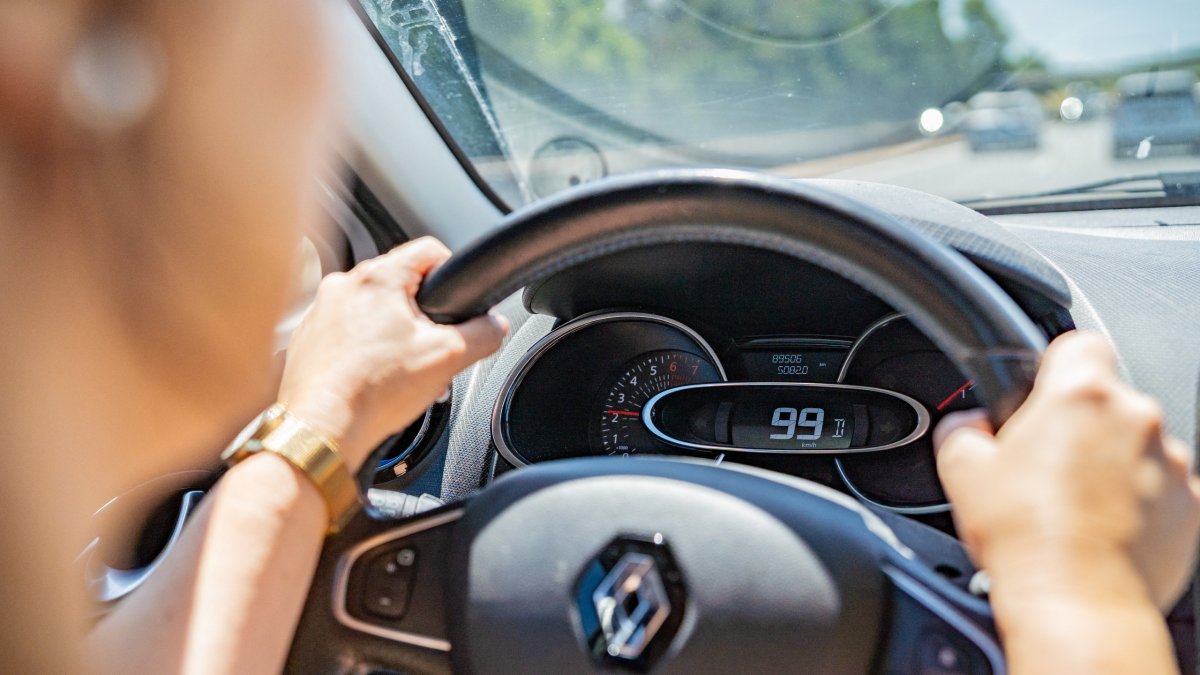
European cars already leave the factory with speed monitoring systems installed, and no, I don’t just mean speedometers. Starting in 2024, the EU mandated that all new cars come equipped with a GPS-based system that tracks the current speed limit and alerts the driver audibly if it is exceeded. These “Intelligent Speed Assist” systems are often installed on cars sold outside the EU as well, though the warning component is often optional or disabled.
This is apparently a “watered down” version of what the Commission initially wanted, which was a full-blown, satellite-based speed governing system. European automakers, likely fearing a massive customer backlash, lobbied hard to get the proposal tossed. Now, Commission officials are once again pushing for full control, the paper says.
“This was always just an interim stage,” a source reportedly told the Mail. “But eventually we will just fix the speed of the car so you can’t go over the speed limit.”
Could this be slippery-slope fear mongering? Consider the source, as always. But consider this too: We’re already seeing bits and pieces of the ISA tech trickling into U.S.-bound cars. If remote speed governors become mandatory in Europe, the tech itself likely will come here, even if it is rendered dormant by regional software packaging.
On top of general public sentiment, there’s another problem with relying on ISAs as speed governors: they’re simply not accurate. According to a study in June, these GPS-based indicators miss critical events (such as a speed limit suddenly changing) up to 25% of the time.
“The worst performing vehicle in real-world testing scored 91.3% accuracy across the driven distance,” the report said. “When assessed on an event-based metric, the system was 74.3% accurate. This means that for roughly 1 in 4 events, ISA is displaying the wrong speed limit.”
“This is simply below the level of performance for most drivers to accept and trust ISA,” the report said.
“The best performing vehicle in real-world testing scored 98.39% accuracy across the driven distance, which implies a near-perfect system,” the report continued. “This same vehicle’s event-based accuracy was 90.3%. This demonstrates with roughly 1 in 10 events being incorrect, even systems which perform comparatively well on UK roads are still not good enough for widespread acceptance.”
But don’t worry, they’ve got a solution for that. These proposed super-ISAs will incorporate 5G data from nearby connected devices to fine-tune your location. That sounds awfully familiar. But it’s not such a big deal that we’re constantly being monitored, right? After all, if you’re not a criminal, you have nothing to worry about.
Got a news tip? Let us know at tips@thedrive.com!
Read the full article here


