







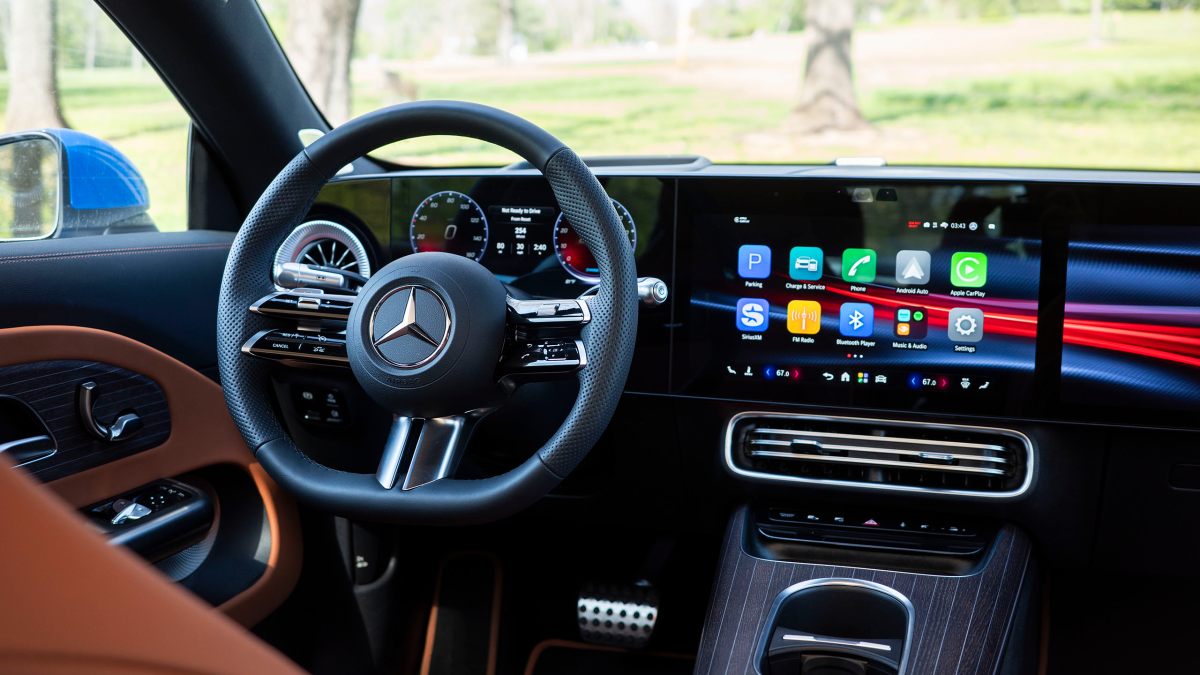
A slate of laws impacting new cars has just gone into effect in the European Union as of Wednesday, and it’s likely to have some opponents. The bloc is now mandating that every vehicle come equipped with an interior-facing camera as part of an “advanced driver distraction warning (ADDW) system” that can monitor when drivers are distracted, drowsy, or otherwise inattentive, and alert them to stay focused.
Attention-minded features in cars are nothing new, and plenty serve up periodic reminders if you’ve been driving for long periods of time to take a break or maybe even stop for a cup of coffee. There’s a difference between an occasional nudge on a “dumb” timer, however, and what an ADDW system would do, keeping an eye on you to catch you slipping.
While any reasonable person would appreciate their fellow motorists being more attentive behind the wheel, the real danger is of course what happens to this footage once it’s preserved, and whether automakers will be careful and clever enough to properly protect it from nefarious actors.
Not to mention, frankly, whether the automakers themselves can be trusted with such sensitive data. All About Cookies, in its own explainer on the situation that anyone concerned should take a look at, referenced a New York Times investigation into how car manufacturers like General Motors and Honda have already been caught with their hands in the proverbial cookie jar, sharing “driving score” data with brokers, who then, in some cases, sold that information to insurance companies, where it was used to raise customers’ rates.
Now, while the EU does mandate that ADDW systems function in a “closed loop”—that is to say, not sending out data to servers and ensuring everything stays within the vehicle—demanding that and actually enforcing it with specific processes are two very different things. And even if the privacy matters are taken seriously, this is still another example of technological encroachment that’s guaranteed to further drive up vehicle costs, at a time when they’re already spiraling out of control.
In addition to the ADDW rule, the EU is also requiring new cars to feature advanced emergency braking systems capable of detecting pedestrians and cyclists, expanded safety glass area to protect pedestrians in accidents, and new tests for worn tires to evaluate safe performance.
Back in 2021, the U.S. Congress passed a bill that would require similar technology, including in-car cameras, in new vehicles to combat drunk and impaired driving. Following an extension, that tech is required to be installed in cars beginning next year.
The problem with that ultimatum is that the tech necessary to passively detect signs of intoxication isn’t mature enough yet, and, in April, the National Highway Traffic Safety Administration deemed that none of it was close to ready for commercialization. So, Americans might be spared of mandated cabin surveillance for the moment, but the way things are going, it’s only a matter of time before we join our counterparts across the pond.
Got a tip? Reach out to tips@thedrive.com
Read the full article here


